Showing posts with label American. Show all posts

Thursday, April 14, 2011

64th Cannes Film Festival

The official selection of films to be screened at the 64th Cannes Film Festival was released today! The festival will take place from May 11 to 22. I'm super excited! Here are some of the films I'm looking forward to (slash these are pretty much all the trailers that I could find and I pretty much like all of them...):

Woody Allen's Midnight in Paris will be opening the festival and be Out of Competition.

This seems like a very fun, spontaneous film. I love the ensemble cast. In case you were wondering, yes! French First Lady, Carla Bruni, is in this film! I love how Woody Allen is making these beautiful cities the backdrop of his films; Barcelona in 2008 and now Paris.


Australian novelist Julia Leigh makes her debut as a director with Sleeping Beauty which will be In Competition.

With Jane Campion's name attached to it, this shall be amazing! I must know what happens in this film!


American director, Terrence Malice's The Tree of Life will be In Competition.

Absolutely stunning! Stupendously cerebral! Of all these trailers, this one is definitely my favorite. Just from the trailers, I will be placing my bets on Terrence Malice winning the Palme d'Or. I'm a bit surprised by Brad Pitt's involvement in this film. I always think of him as a box office superstar but never an award winning actor. But the choices he has made lately are phenomenal! Babel, Benjamin Button, and now this.


Habemus Papam (We Have a Pope) by Italian director Nanni Moretti will be In Competition.

Not quite certain what this film is about without a synopsis or subtitles. But I appreciate what seems to be a whimsical, lighthearted, and touching film on an institution that is all too serious.


The Yellow Sea by South Korean director Na Hong-jin will be competing in Un Certain Regard.

A dramatic, intense trailer that had me on the edge of my seat. Seems to be a heart gripping thriller. If you, like me, is still interested in the film after the trailer please read the synopsis here!


Jodie Foster's The Beaver will be screened Out of Competition.
I like Jodie Foster. I really do, mainly because of her role in The Silence of the Lambs. Let's just face it--she's probably never going to be as great as when she starred as Clarice, but I'm still rooting for her. This could be a comeback from both Jodie and Mel!

One last film that I am looking forward to is called We Need to Talk about Kevin directed by British film director Lynne Ramsay and starring Tilda Swinton. Although it has yet to release a trailer it sounds to be a promising film. The premise of the film, as taken from Wikipedia, is about "a mother recount[ing] the events leading up to and following her son's massacre of students and teachers at his high school." Intriguing, right? The film will be In Competition.

And so that is that! Looking forward to May 11!

Tuesday, February 8, 2011

It's been a while...

Dear all,

As I write this post on this nearly forgotten blog, I am drinking chicken noodle soup. I have a very unfortunate cold. Since my last post, many things have changed. I am now in Boston in hopes of finding a job (that very very elusive job. My dear readers in Boston, if you know of any job opportunities please let me know). I am not longer subscribed to Netflix. And I am eating a lot more canned soup and frozen food that are on sale. To follow my journey through chronologically organized photos, please click here!

On the movie front, we all know that the Golden Globes and SAG Awards took place. Congrats to my favorites in winning: Laura Linney, Glee, Modern Family, Temple Grandin. And although I put my Netflix account on hold, I have seen a few movies since moving away from home.

The Savages

Such wonderful performances by both Laura Linney and Philip Seymour Hoffman. It's a quietly emotional and subtly funny film. A more polished, well-scripted version of The Squid and the Whale.


The King's Speech

Fantastic performance by Colin Firth. Absolutely loved Helena Bohnam Carter. Her performance as the Queen Mother really puts into perspective what a wide range of roles she can play. I loved the lightheartedness that Geoffrey Rush brought to the film. But I can see how this film won't win the Best Picture at the Oscars this year.


Scott Pilgrim vs the World

What an imaginative film! Totally not what I expected. Love the displacement of time and live-action animation. The closest film I can think of similar to Scott Pilgrim is (500) Days of Summer, but it really doesn't even come close.

Friday, October 15, 2010

Cities of Love/Anthologies

Paris, Je T'aime


Paris, Je T'aime seems to have started the run of anthology films about cities back in 2006. 18 short stories make up Paris, Je T'aime--each about a different arrondissement in Paris. (Wouldn't it be perfect if there were only 18 arrondissements so each district get their own story? Sadly 2 arrondissements got left out.) I really liked the film. The music used is brilliant, goes really well with the mood of each story. And the way the shorts are stringed together in the end is touching, somewhat dainty.

Having watched it over 2 years ago, I still remember liking, in particular, the Quais de Seine, Tour Eiffel (story about mimes that inspired my Halloween costume sophomore year), Parc Monceau (clever, single continuous shot story directed by Alfonso Cuaron), Pere-Lachaise, Faubourg Saint-Denis (Natalie Portman!), and 14e arrondissement shorts. The film not only features an ensemble cast but some of the most relevant directors today: Gus Van Sant, the Coen brothers, Christopher Doyle (Wong Kar-wai's long time cinematographer...although I really didn't like his feature), Olivier Assayas, Wes Craven, and Alexander Payne.

What Paris does really well is show the beauty and romance of Paris whether it's through a bittersweet breakup, a mother losing her child, love stories, or the city's racial diversity.

New York, I Love You


I anticipated the premiere of New York, I Love You for quite a long time. I did a Looking Forward post about it back in 8/12/09 and I finally watched it last month. I think it went through some sort of distribution problem, and the release date kept getting pushed back. Anyways, this anthology was a huge letdown.

The way the short films is tied together is an embarrassing cliche. The music is not memorable unlike Paris, Je T'aime's soundtrack. And the stories themselves are not as interesting nor do they feature the boroughs of New York City in a way that lets the characteristics of each borough shine.

Of the 10 shorts, there is only one that I truly liked. It's the 7th section directed by Shekhar Kapur (Elizabeth & Elizabeth: The Golden Age) and written by Anthony Minghella (who unfortunately passed away 2 years ago). This short features Shia Labeouf, Julie Christie, and John Hurt. It's really beautiful, ambiguous, and a must-see. Rent the dvd or find it online but just skip to this short feature!

Tokyo!


Tokyo! doesn't really belong to the Cities of Love franchise that includes Paris, New York, and will include Shanghai, Rio de Janeiro, Jerusalem, Venice, and Timbuktu. (I really don't know how they are going to do all this. The two produced so far have been financial flops.) But Tokyo! follows the trend of these anthology films. This one is slightly different with just three segments; and while they are about love, the way each feature treats Tokyo is strangely unappealing and negative.

Honestly, I don't think I like any of the three features. Bong Joon-ho, who directed two of my favorite films, The Host and Mother, directed the feature Shaking Tokyo. The story is about hikikomori, "the phenomenon of reclusive people who have chosen to withdraw from social life, often seeking extreme degrees of isolation and confinement." (Wikipedia) It's somewhat interesting and the best of the three films in terms of the style, story development, and characters. But I don't know if I would want to watch it again.

Bummer...these anthology films just keep getting worse and worse huh?

Tuesday, September 14, 2010

Stolen

In some ways, documentary is emerging as one of my favorite genres of film. Before, I kind of had the preconceived notion that documentaries lack style, artistry, direction, narration among many other things. Documentary film, to me, was a way to collect facts, interviews, video footages and present all these elements together as a body of work. Documentaries were passive, apolitical, and historical; they did not do more than to just present an event, a person, or place.

But today, documentaries have very strong messages and are on a mission to deliver the "truth" according to their directors, however how impartial the truth is. They certainly have style and some of the most unique narration. They can be touching, infuriating, and life changing. For me, my respect for documentary started with An Inconvenient Truth. Then it reached a new height with Sicko, my favorite documentary of all time along with Chernobyl Heart, a short feature. And now Stolen.

As I wrote earlier, documentary has in some ways emerged as one of my favorite genres of film. It is one of my favorites because, more than often, it hits a subject matter that I am passionate about. (If most documentaries have a conservative, right-leaning voice, I probably wouldn't be watching any of it. But let's just face it, documentaries are mostly liberal, leftist, environmentally friendly, peace-loving. The entertainment industry is one that is not conservative except for maybe the AMPAS.) A subject that I am more interested in than anything else is art, especially Johannes Vermeer.

Stolen is a documentary on the Isabella Stewart Gardner Museum art heist--the biggest in America. An estimated $200 to $300 million worth of art was stolen including Rembrandt's only seascape, several Degas, a Manet, and one of only 36 Vermeers in the world. Because of the rarity of Vermeers and the quality and significance of the Vermeer, the documentary focused largely on the this one painting.

What I liked about Stolen is the frame story, detective approach that it took to try to solve the crime and get the painting back. It interviewed art historians who put an amazing perspective on the atrocity of this crime. But mostly, it followed a detective, who specialized in art theft, on his attempt to recover the painting. The film dove so deep into the crime that the film maker and detective were literally one person away from getting the paintings back. The film also revealed the darkness of this art heist--how the mafia in Boston and in Ireland are involved, how politicians could bring the paintings back, how the FBI is more interested in catching the thieves than recovering the paintings, and even how religion can a part of the recovery process.

Needless to say, Stolen is one documentary that is extremely interesting. But of course, it has its downsides. Stolen reaffirms my stereotype that documentaries can have no style, artistry, direction, or narration. This film is carefully organized so that everything made sense, but it lacked creativity. Aesthetically, it might be no better than a home movie. It is, however, just that--a very low budget documentary that was made for television. Still, if you are interested in Vermeer, art thefts, Isabella Stewart Gardner, or her museum, Stolen offers more insights into these topics than one could ask for.


Monday, September 13, 2010

Winners everywhere!

What a great week for some of my favorite artists. My last post was dedicated to Sofia Coppola, the winner of this year's Venice Film Festival's top prize--the Golden Lion--for her newest film Somewhere.


Last night, Lady Gaga won multiple MTV's Video Music Awards(almost every category she was nominated for) for her videos Bad Romance and Telephone. Yay for Eminem's wins as well. Before his latest album, Recovery, I did not like him for the most part. But I feel like he has emerged this year with more maturity and humanity (at least with the two singles released so far).

And lastly, The xx won UK's Mercury Prize beating 11 other nominees.


P.S. Lady Gaga's meaty dress has been done before. In 2002, contemporary Chinese artist, Zhang Huan, wore a meat suit in his performance art piece My New York. The idea was quite similar--post 9/11, Huan walked through the streets of NYC in a muscle/meat suit to symbolize the strength of New Yorkers.

Saturday, September 11, 2010

Congratulations Sofia!

Friday, September 10, 2010

The Cove

After I watch a movie, I always read as much as possible online about the movie, the subject matter, the stars, production notes, and the like. Especially for a film in the historical/period and documentary genres, I want to know how accurate and impartial a film is. Documentaries are nearly always unapologetically one-sided and so it's interesting to seek out what the other side has to say.

Most of the time, I wholeheartedly agree or sympathize with the message or goal of the documentary for example Sicko, Food Inc., and An Inconvenient Truth. But I felt a little bit uneasy about The Cove, a bit reluctant to embrace the message of it all.

The Cove won the Best Documentary Feature at this year's Academy Awards. To me, it mainly documented the journey of a group of American activists who go to Taiji, Japan, where an annual hunting/slaughtering of dolphins take place. And along the way, Ric O'Barry, the man who is at the center of the mission to stop this dolphin killing tradition, explains why he became involved. My favorite part of The Cove is how the crew tried to document this event. The fishermen in Taiji who partake in the killing obviously do not want outsiders to see what really happens in the cove. Thus the area is heavily fenced and guarded by local police. To get footage of the killing, the camera crew had to sneak around at night with night and thermal vision cameras. This part of the film is a very exciting and a bit Mission Impossible like.

What we ultimately see is the undeniable truth. Pathetic method of driving the dolphins into the dove. Cruel slaughtering of dolphins. Heartbreaking footages. And blood. Lots and lots and lots of blood. At the end, it is impossible to feel sorry for the helpless and hopeless dolphins who are obviously suffering a lot of pain. And I cannot help to feel disdain for the people who are a part of this killing. The hunt is disgusting, hateful, and barbaric. (Those are probably the harshest words I've ever used in this blog.)

But going back to what I said earlier, I try to read upon the film and its subject matter after the viewing. What I found is a bit too much discrepancies between the accounts of how the footages were shot. I really do not like how the Japanese fishermen said that originally Ric O'Barry went to Taiji for a different purpose. Yet the film portrays the film crew as being there for the purpose of documenting the dolphin hunt from the start. Furthermore, I dislike how there is the "white man's burden," "the West telling the East how to live" sort of point of view. So in the end, I am not entirely sure if the people involved in this film are as noble as they appear to be.

Thursday, August 12, 2010

The Art of the Steal


The Art of the Steal, a documentary on the government and private interest groups' hostile efforts to make a private art collection into a public collection, has been making me think about the issues presented.

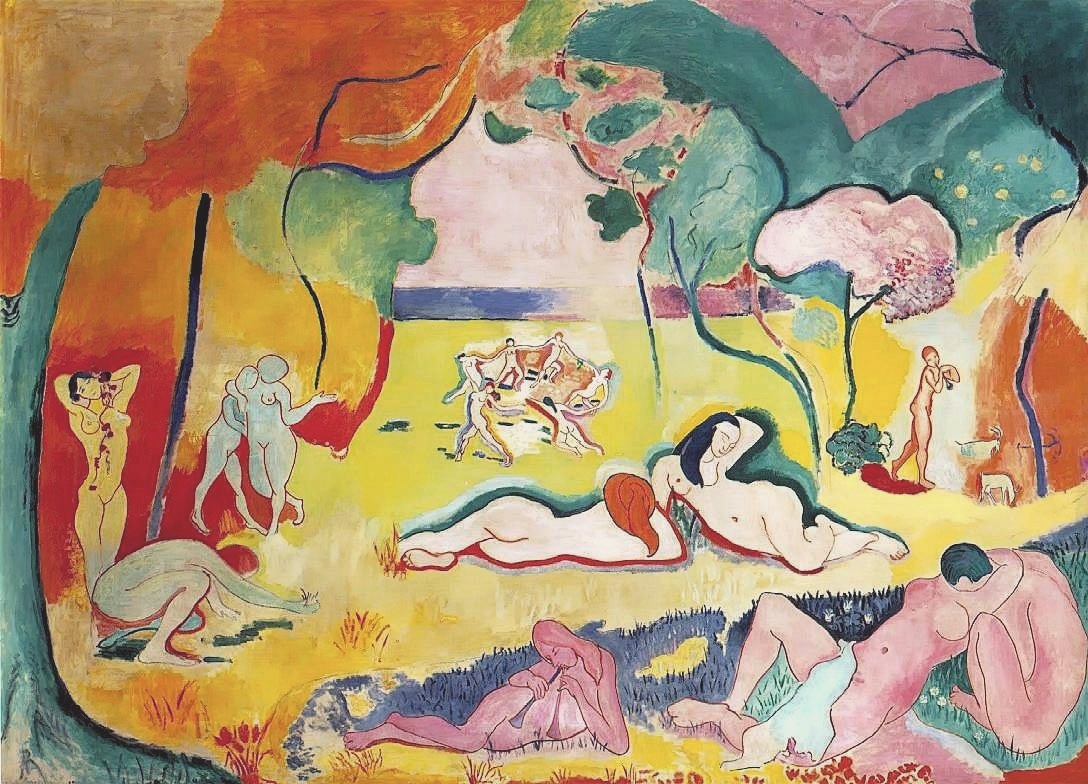
The documentary follows the fate of the art collection of Albert Barnes who made a mass fortune inventing the antiseptic drug Argyrol. Appropriately, Barnes' art collection was put in the trust of the Barnes Foundation located outside of Philadelphia. The Foundation is not only a house of art but also an educational institution. Barnes' collection includes 181 Renoirs, 69 Cezannes, 60 Matisses, 44 Picassos, and 14 Modiglianis. He has Matisse's The Joy of Life, a masterpiece that was extensively discussed in my art history course, Van Gogh's Portrait of the Postman Joseph Roulin, and Seurat's Models. All in all, Barnes collected around 9,000 pieces of art valued at over $25 billion today. His Impressionism-focused collection, according to the documentary, is larger than that of the Met or the MoMA.


Despite having such a great collection, Barnes did not welcome the public to see it for one important reason. In 1923, Barnes put on an exhibition of his collection but was completely dismissed by the critics. At the time, his Pre-/Post-/Impressionist and Fauvist collection was considered too avant-garde, unrefined, primitive by the elite and art critics of Philadelphia. After this incident, Barnes grew extremely antagonistic towards those who did not appreciate his art collection-namely, the elite and art critics. Barnes then closed the door to his collection to those people but welcomed students, art educators, and the working people. Along the way, Barnes made many enemies.


To prepare for, what he foresaw as, the fate of his art collection, Barnes wrote in his will that the collection will never leave the Barnes Foundation, be lent, toured and basically fall in the hands of those who had despised. Additionally, the collection would only be opened to the public two days a week according to his will. Sadly, Barnes' will was not honored. A few decades after Barnes' death, the physical building of the Barnes Foundation fell into disrepair, funding ran low, and control of the collection entered the hands of people who had other plans for the famous/infamous art collection.


The collection was sent on an extremely successful world tour. The Foundation opened up to the public completely. And without a champion for Barnes's vision and will, long-time enemies of Barnes crept up to some control of the Foundation. Today, a new building is being constructed just adjacent to the Philadelphia Museum of Fine Arts to house the new Barnes Foundation--the ultimate insult to Barnes who hated the Philadelphia MFA for every thing it stood for.

So the issues at hand: Should the Barnes Foundation be opened to the public? Should the paintings be toured? lent? Should Barnes' will be honored despite the caliber of the collection?

I am having a hard time answering most of these questions. Originally, I thought it is important to honor Barnes' will and that the collection should not leave the original setting of where the collection is intended to be housed and viewed . Barnes arranged his collection in a way that is different from museums. Paintings are not grouped by artistic styles, periods, or by artists; instead, Barnes' paintings are group among furnitures and decorative art to create aesthetic synergy. In some ways, it's like the Frick Collection where you are experiencing someone's house--the way where each artwork is hung and where each furniture is placed give insight into Frick's life and taste. On the other hand, this argument is also an unanswered questions by the age old dilemma of the Parthenon Marbles. Does the original setting of the artworks illuminate the works, provide greater meaning, and provoke greater appreciation?

But if Barnes' will is followed through, this also means the masterpieces within the collection will not be opened to the public as much as I think it should be. I can probably go on and on about the topic and never really reach a conclusion. After all, 200 years later, the debate on the Parthenon Marbles still continues.

Thoughts?

Monday, June 7, 2010

The Stoning of Soraya M.


Unlike Departures, I probably can't say enough about The Stoning of Soraya M. This is one of those films where the message matters more than the acting, the cinematography, or even the script. This film is about women's rights, cruel and unusual punishment, and religion. Think of this film as a combination of The Last King of Scotland, for its storyline, and Deepa Mehta's Water, for its social commentary.

As the title suggests, the film is about the stoning of Soraya M. who is played by Mozhan Marno and not Shohreh Aghdashloo as the trailer might misleading. (Aghdashloo starred in one of my favorite films--House of Sand and Fog.) The leading actress in the film is indeed Aghdashloo who holds the film together beautifully with her powerful and dramatic acting. Many critics complained about the film's glorification of the stoning scene, prolonging the scene while adding no real and meaningful substance to the film. I too agree. But at the end of the day, a film is out to make money. Hollywood is not art for art's sake.

While watching the film, there were so many moments when I thought to myself "this is not right!" "something needs to be done." It disgusted me that the mayor and mullah, the religious cleric, allowed the stoning to take place yet are afraid of the news of this event leaving the town. Moreover, the stoning was treated as a ceremony and a sport where the crowd anticipated the event and cheered when Soraya M. was struck.

This film further strengths my thoughts on religion. If you know me, you probably know I am quite the atheist. I hope that this film and the book of the same title that the film is based on are generating discussions on the issues mentioned. And I do hope in the near future that problems with women's rights, cruel and unusual punishments, and religion in Iran and other Middle Eastern nations will be alleviated.

Monday, March 1, 2010

Temple Grandin


Temple Grandin is an autistic woman who revolutionized the cattle industry by introducing humane slaughtering procedures and technology. Despite her autism, she graduated from college, received a Ph.D., and is currently an animal science professor and advocate of humane treatments of livestock. The HBO film of her name by Mick Jackson, who directed Volcano that starred Tommy Lee Jones and Anne Heche, honors her achievements and life thus far.

I never heard of the film and did not know who Temple Grandin is. I was informed by my friend of the screening at our on campus cinema while walking back home. The producer and Temple Grandin herself were going to be at the screening so I took a detour to get the tickets.

In the film, Claire Danes plays Temple. (I have always liked Danes because of her performance in Brokedown Palace alongside Kate Beckinsale. Brokedown Palace is a poignant film of two young Americans' vacation to Thailand that ended up in torturing legal troubles. I feel sad that Danes never got a breakout role and the recognition that she deserves.) At the screening, Temple said that she was so amazed by Claire Danes' performance and Danes' resemblance to herself. When she saw the film, she thought she was going through some surreal time machine back into the 70s because Danes acted just like she did. And Temple was right. Having seen and heard Temple in person, Danes got the accent, facial expressions, and physical movements perfectly. Danes was also able to capture the unusual humor that Temple has which lightened the film a bit.

It is definitely worth the time to watch the life of Temple. Her struggles, her characters, her achievements are inspiring. She was made fun of, bullied, rejected, and discriminated against throughout her life, yet she never gave up trying to innovate, advocate, and educate for a better tomorrow.

Friday, December 25, 2009

Precious


I watched Precious: Based on the Novel "Push" by Sapphire on Christmas Day. It is not exactly a Christmas movie, but Precious was a great choice. The story is quite simple: a coming of age story of a young, obese, and illiterate African-American girl growing up in Harlem with an oppressive, sinister, and demanding mother. Precious, played by Gabourey Sidibe, is only 16 but is pregnant and forced to run her family; Precious has to cook, do the dishes, and get welfare checks while her mother, Mary, played by Mo'Nique, orders Precious around while watching television and chain smoking.

The film gets incredibly violent and heartwrenching as Mary verbally and physically abuses Precious. Despite her family conditions, Precious perseveres in becoming a more educated individual with the help of Miss Rain, played by Paula Patton, a kind and selfless special education teacher. Mariah Carey also has an interesting role in the film as a social worker who tries to help Precious.

What I liked about the film is the acting by Gabourey Sidibe and Mo'Nique. Even though I have not yet seen other Golden Globe nominated films, I will be disappointed to see Sidibe or Mo'Nique walk away from the evening without a win. The two actresses make believable characters. By the end of the film, I was sincerely rooting for Precious and waiting for Mary's downfall.

This film brings the audience into a world that you might read in newspaper and see on the news about sexual and child abuse but never witness in real life. The acting in conjunction with the occasional documentary filming style make the film utterly authentic. It brings to light the grim reality that some children face in their homes and in life: illiteracy, poverty, and physical, sexual, & mental abuses.

Friday, September 4, 2009

Stranger Than Paradise


I must say
Stranger Than Paradise is a difficult film to watch. Not only is it slow, it is also in black and white--something I stay away from. I only watch black and white when I am forced to in class. And, yes, I watched STP in my film course.

STP
, which is a lovely title I think, is a dark comedy but I found few of the scenes funny. It's about Eva, a Hungarian teenage, who visits her cousin, Willie, in New York City. Willie who is a hipster lives a very American life. He has his own apartment with a television and appliances that can be found in every American home like a vacuum. He demands his cousin and aunt to speak in English. And in the very beginning, he makes sure Eva knows that he does not want her to be staying with him. He is cold, unwelcoming, and arrogant. But Willie's friend, Eddie, takes an interest in Eva and everyone eventual become friends.

The rest of the film documents their adventures in and around Cleveland and Florida. The film goes by very slow which is not made any better by the fact that it's in black and white. The ending is, however, rewarding. There is a fantastic, ironic twist at the end that made me chuckle a little. Also, it ends on a good note that brings the film to a full circle.


The story and the way the characters behaved reminded me of my favorite book,
The Stranger. People did not care much about others and even themselves. They would watch television programs for hours and hours without any reason and they showed no expression of liking what they are watching. They lived a very empty life without any ambitions, living their lives as their lives come to them. Whether that's a good thing or a bad thing, nobody really cares.

Despite me not truly enjoying the film, STP has been recognized several times. It won awards at the Sundance, Rotterdam, Locarno, and Cannes film festivals. Furthermore, it is a film preserved by the National Film Registry as a "culturally, historically, or aesthetically significant" film.

Friday, August 14, 2009

Children of Men & Blindness

Originally, I was going to treat Children of Men and Blindness as separate entries. Then I reflected upon how well the two go together as both films share a stark view on the government. Furthermore, they both chose a pandemic as the catalyst to catastrophic changes in society. If you enjoyed reading 1984, I think you will like both COM and Blindness.


In
COM, women become infertile, no newborns for 18 years. The society is plagued with problems and chaos; governments fail; UK becomes the last standing country with a totalitarian government and a stern police force. So many political, religious, humanitarian issues are packed into this film. Many times these issues are obvious to spot in the film like reference to Guantanamo Bay prisoners. Other topics are sometimes more subtle like all the allusions to religion throughout the movie. The film almost becomes like an I spy game.

In addition to the allusions, references, which I enjoyed, I also liked the character developments. Clive Owen plays a compelling antipathist who becomes an unlikely hero. Claire-Hope Ashitey, the actress who plays Kee, is a naive, immature girl who grows into a determined young woman risking her life for her child and for the survival of humanity. Michael Caine also did a fantastic job as a John Lennon/Jesus look-alike. It's too bad that Julianne Moore has only a small role in the film. There are just too many great things that I can say about the movie, but I am afraid this post will get too long...


Blindness is very similar to COM on numerous levels. Blindness features Julianne Moore as well, this time in the leading role (The film features many other recognizable faces including Gael Garcia Bernal, Sandra Oh, Mark Ruffalo, and Danny Glover). Both films are based on books of the same titles. Jose Saramago, who wrote Blindness, the book, was awarded the Noble Prize for Literature. In both films, unlikely pandemics change the lives of the characters.

Like
COM, I enjoyed this film on many levels but not so much on the character developments. I loved the techniques used to convey blindness in the film such as the color white, flashes, fuzziness, and spottiness. The director gives you the vision of the actors and actresses through the filming techniques. I also loved the setting of the film. You never learn where these characters live. The film feels truly international, not only because of the cast, but because of the collection of cities where the film was shot. This use of cities gives the sense that no one can escape the disease no matter where you live.

One difference that I would like to mention is that
COM is more of a political film and Blindness is a philosophical film. I enjoyed both films despite the negative reviews for Blindness. I watched COM twice and liked it even more the second time.

P.S. On a very very last note, I loved, what I thought was, the reference to Judith slaying Holofernes in a scene in
Blindness.

Wednesday, August 12, 2009

Looking forward

There are two films that I am looking forward to: New York, I Love You and Coco avant Chanel. After watching Paris, Je T'aime, I have been anticipating the release of the portmanteau film based on New York City. New York City is my favorite American city. Sadly, the released date kept getting pushed back from like November 08 to April to May and now October 09. It's strange that they kept changing the date. It premiered all the way back in September 2008 at the Toronto Film Festival. I'm guessing because Paris, Je T'aime was not a financial success, the producer had a difficult time finding a distributor for the NYC version. Limited release: 10/16/09


Since watching
Amelie, I have been following Audrey Tautou. I also loved her in The Da Vinci Code. :p She was courageous, intelligent, yet gentle. I think casting her for Coco Chanel in Coco avant Chanel is perfect. I am confident that Audrey will play Coco Chanel exceedingly well; hopefully this film will be for Audrey what La Vie en Rose was for Marion Cotillard. Limited release: 9/25/09


Wednesday, August 5, 2009

500 Days of (Summer)


The days leading up to the limited release of 500 Days of (Summer) and the days after, the film did a lot of advertisement in Washington Post's Express, which I read every morning. They even created a fake front page promoting the film kind of like the ads for LIFE publications on Time magazine. The reviews were great too so I went to watch the film alone. It was my first time going to the movies alone!

I thought the film was going to be a summery love movie because of the title. I was wrong; but I loved the surprises that I got: the twists, the ups, the downs, the laughter, the tears, and the live-action animation! As raved by the critics, the techniques used to deliver the story were innovative and refreshing. I particularly loved the split screens segment which is also one of my favorite scenes.

Needless to say, Zoey Deschanel and Joseph Gordon-Levitt were great. The chemistry is fine; nothing for me to complain about. Since the film is still in theatres, please go watch it!!!

Sunday, July 26, 2009

Savage Grace


What a story of some eccentric lives! Savage Grace is based on the book of the same title. The story is of the real lives of Barbara Daly Baekeland, Brooks Baekeland, and Antony Baekeland played by Julianne Moore, Stephen Dillane, and Eddie Redmayne, respectively. Barbara is a controlling, unreasonable, and wild character who drives her husband away and has an incestuous relationship with her son. Brooks is a proud, serious, but a cold husband who doesn't really have a relationship with his son. Antony is an intelligent and well-educated homosexual born with a silver spoon in his mouth. He has complex relationships with his parents, loving them at times but also showing disdain and no respect for them on other occasions.

Without giving the ending away, I can say it's quite unexpected (unless you know about their lives already). The ending is not surprising because it does not wow you away, leaving you in shock. But it is a good ending--calm and unusual. I think SG is one of those movies that's good but something is missing. Maybe it's a little too clam for such an unique story and Julianne Moore's character a bit too irrational and unlikable. There are several things I like about the film though: the layout of the story and the design of the film.

The film is divided into chronological five segments each of a different location and a different year. You get to see five different cities from America and Europe including NYC, Paris, London, South of France, and Spain (I think...). Each segment also fast forwards five to ten years so that the first chapter, Antony was just born then Antony goes to middle school and so forth. With this story telling technique, the set designs changes in style as the years go by.
There are also gorgeous estates, beaches, gardens to be seen in the film. As a result, the film is also aesthetically pleasing to see.

One last thing--I love the title of this film: Savage Grace. All the characters have grace in that some are socially apt; some are intelligent; and others are cultured. But some of the actions that they choose to take are cruel and savage.